Tsujiru Nihongo now displays furigana above kanji and numbers throughout Steps 1–7 of the Japanese course.
Readings now appear directly above kanji and numbers in conversations
When learners listen to a conversation or read it sentence by sentence, readings appear above the relevant text—for example, きょう above 今日 and げつようび above 月曜日. Learners can follow the sentence and its reading in the same place without looking at a separate line.
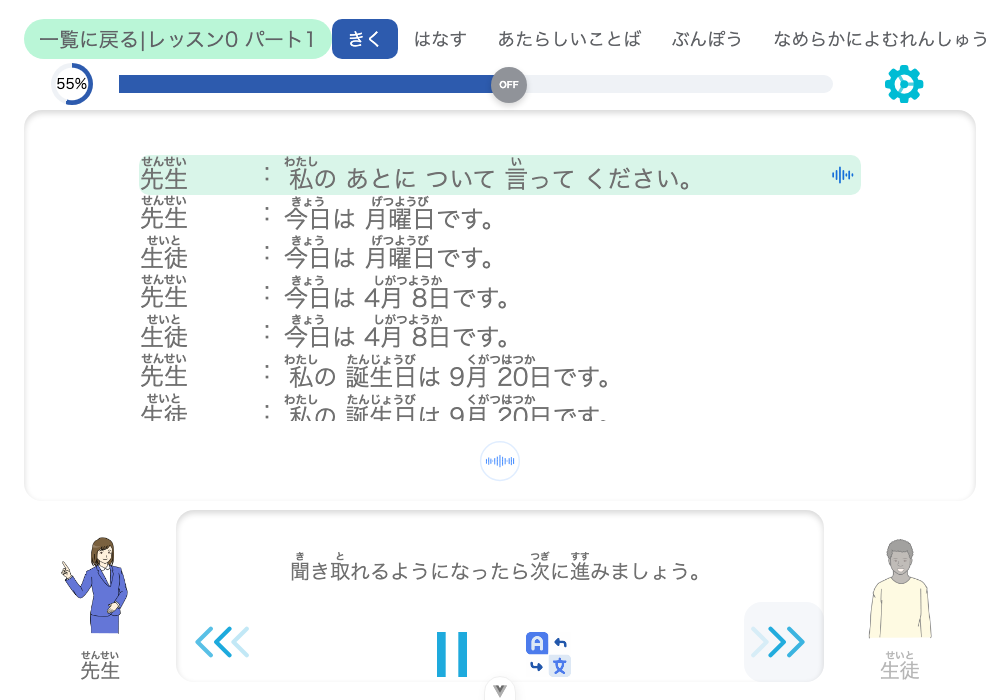
Speaker names and practice instructions also include furigana
Furigana is shown not only in the conversation itself, but also above speaker names such as 先生 and 生徒 and in instructions such as 聞き取れるようになったら次に進みましょう. This makes it easier to confirm who is speaking and what to do next.
The target sentence keeps its furigana during speaking practice, when comparing a recording with the model audio, and when reviewing speech-recognition results. On screens that color-code matched characters and characters that need attention, learners can see the color feedback and readings together.
Dates and phrases use readings that match the context
Dates that contain numbers also show natural readings, such as しがつようか for 4月8日 and くがつはつか for 9月20日. Furigana is limited to kanji, numbers, and other parts that need a reading, so kana-only text is not labeled unnecessarily.